
The Resilience and Significance of Traditional Gyms in the Era of Home Workouts
I. The Prevailing Home - Workout Narrative
It was indeed the year of at - home workouts, with brands like Peloton, Nordic Track, and Beach Body leading the charge. Some individuals even took to Craigslist to equip their garages for personal fitness spaces. Repeatedly, one has heard people extolling the virtues of their home workout routines and prognosticating the demise of traditional gyms. The question often posed is: why would anyone choose to return to a traditional gym?
II. The Inherent Social Nature of Humans
A. Beyond Practicality
Forces that transcend the cold calculus of practicality and efficiency drive human behavior. We purchase paperback books for the tactile experience, passionately support our favorite sports teams, yield the right - of - way to strangers at four - way stops, and invest time daily in curating our wardrobes. This is because humans are social beings who cannot flourish or even define themselves in isolation.
B. The Power of Community over Drugs
In the 1970s, it was widely believed that drugs such as morphine and cocaine were almost irresistibly addictive upon entering the bloodstream. Extensive rat studies seemed to confirm this, as rats, when presented with a choice between water and water laced with cocaine or morphine, would repeatedly consume the drugged water until overdose. However, rats, like humans, are social animals. The rats in these initial tests were isolated in cages. Dr. Bruce Alexander, acting on a hunch, created “Rat Park,” an environment where rats could freely interact, play, reproduce, and engage in natural rat behaviors. When the drug - introduction studies were repeated in this new setting, no rats overdosed, and most tried the drug solution only once. This has significant implications for humans emerging from a year filled with lockdowns, virtual existence, and technology - induced divisions. As Dr. Lloyd Sederer aptly states, “Humans, not just rats, need to be part of a community, encouraged to relate and experience the support of others. This is a fundamental psychological truth...” Despite the efforts of smartphones to the contrary, we are innately drawn to congregate, seeking real communities of people with whom we can share our experiences. Physical interactions, whether it's a fist - bump, high - five, or more specialized jiu - jitsu maneuvers for enthusiasts, are essential for us to feel alive. This very need for interaction spurred the first gym and playground movement around the turn of the 20th century.
III. The Misguided Notion of “Cure” in the Past
A. The Second Industrial Revolution Parallels
As Brett and Kate McKay document in their comprehensive “A Call for a New Strenuous Age,” many aspects of our current technological revolution mirror the second industrial revolution of the late 1800s. These include:
The loss of autonomy and skills once integral to human life.
The decline in physical strength and vitality.
The erosion of virtues such as self - reliance, perseverance, and courage.
B. The Search for a Cure
In late 19th - century America, there was a widespread sense of anxiety, apathy, and malaise. People were convinced that modern living was too taxing on their mental well - being. The proposed “cure” was more rest and less responsibility. However, idleness and avoidance only exacerbated the situation. A counter - movement emerged, arguing that the lack of challenge and genuine experience was the root cause. The loss of clear community expectations, rites of passage, meaningful goals, and a way to measure oneself made life seem empty. People yearned for the joy of striving, a sense of standards, and the feeling of personal growth. They sought to join communities that could re - ignite this vitalist perspective.
IV. The Birth and Essence of the Gym
A. The Rise of Physical Training
As people looked to challenge themselves, both individually and in competition with others, physical training and athletics gained popularity. Gyms, obstacle courses, and sports teams became magnets for those渴望 an active and more authentic life. The very essence of the gym is to counteract the negative societal trends that threaten to reduce us to lesser versions of ourselves. This underlying philosophy is central to the concept of “breaking muscle.” Gym owners and fitness enthusiasts would do well to remember these origins.
B. The Current State of Fitness
Today, the fitness landscape, with its gyms and popular workout advice, is increasingly influenced by influencers who tell individuals what to think. The corporatization of fitness has promoted a form of fitness that is easy to package and market, such as:
“Follow this program, and you'll achieve a better physique.”
“Join this gym, and you'll have access to state - of - the - art equipment.”
Yet, it's important to note that even the depressed rats in the experiments had a form of exercise equipment (the hamster wheel), similar to the modern - day treadmill. Most people aspire to look, feel, and live better, but many struggle to adhere to their fitness goals. Gym managers can attest to the low percentage of members who use their memberships regularly. Even those who do are often seeking something more. People don't merely want an exercise plan; they desire a sense of connection and authenticity. While virtual coaching has its place, it's difficult to replicate the authenticity of in - person interaction.
C. The Community Factor
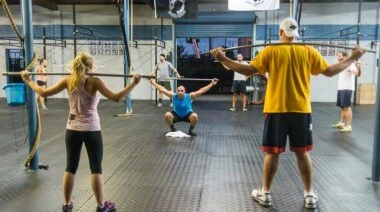
We may initially be drawn to fitness for physical transformation, but what keeps us engaged is the sense of community. CrossFit, for example, has mastered this aspect:
It has rituals that foster unity among participants.
There are rites of passage where members support one another.
It promotes a philosophy, mindset, and self - measurement system that cultivates confidence and motivation.
Most importantly, it builds a community bound by shared physical presence.
This is not unique to CrossFit. Sean Griffin's Chicago Primal Kettlebell Gym, along with many private gyms, niche sports, and yoga studios, also excel in creating such communities.
D. The Potential of Game - Based Fitness Communities
There is a potential for a gym or exercise movement centered around game - based fitness. As someone with over ten years of a daily workout habit, I'm constantly surprised by how fatigued I get when engaging in childhood games like dodgeball or capture - the - flag with my athletes. The question is, why do adults stop playing? This can be attributed to cultural norms. Adults are expected to be serious and abandon games. Exercise is acceptable, but it should not resemble playtime and must be scheduled at inconvenient times to avoid interfering with the parental “rat race.” It's often seen as a chore, and any passion or independent hobby requires justification. Gyms, however, can serve as a counter - force to these detrimental cultural trends. By maintaining an active and fulfilling life, you're not a bad parent; in fact, you're setting a better example for your children than a sedentary lifestyle filled with screen - time and fast - food. If you want your children to lead extraordinary lives, the best thing you can do is model that behavior. Similarly, if you want to improve your own life, taking action is key. While there are many worthwhile habits you can start on your own, joining a community where positive habits are the norm makes it easier to stick with them. This is why we are naturally drawn to gyms.
References:
Alexander BK, Beyerstein BL, Hadaway PF, Coambs RB. “Effect of early and later colony housing on oral ingestion of morphine in rats.” Pharmacol Biochem Behav. 1981 Oct;15(4):571 - 6.
Lloyd I. Sederer, MD. “What Does “Rat Park” Teach Us About Addiction?” Psychiatric Times. June 10, 2019. Accessed April 20, 2021.
Brett and Kate McKay, “A Call for a New Strenuous Age.” The Art of Manliness. Accessed April 23, 2021.
Why Gyms Are Coming Back More Essential Than Ever
•
Author: Steve Keane
•
Fitness
Health
Share this article