
Conditioning and Fitness: A Distinctive Analysis for Strength Athletes
The Controversy and the Big Picture
The topic of conditioning, depending on the perspective, can stir controversy. However, in essence, it is rather uncomplicated. Before delving into the dos and don'ts, it is prudent to take a broader view.
The Misconception of Conditioning
A prevalent fallacy exists regarding the nature of conditioning. The majority seem to simplify it to the equation: conditioning = cardio. For instance, while a strength and conditioning coach aims to enhance an individual's strength and fitness, this view is not incorrect but rather incomplete.
Conditioning and Fitness: Not Synonymous
Cardiovascular Fitness
Cardiovascular fitness is a health - related aspect of physical fitness, defined by our capacity to transport oxygen to working muscles. Fundamentally, it pertains to how efficiently the heart can pump oxygenated blood to meet the demands of exercise. Although improving cardiovascular fitness is advantageous for numerous sports, its direct benefit to strength sports warrants examination.
Conditioning Defined
Conditioning transcends mere fitness. It implies being prepared to meet the specific demands of a sport or activity. An athlete may possess high levels of general fitness yet be ill - conditioned for a particular task. Consider the distinct conditioning requirements of a marathon runner compared to a powerlifter, strongman, or bodybuilder. Conditioning encompasses the necessary physical attributes, environmental familiarity, and overall preparedness for performance.
Conditioning Is Specific
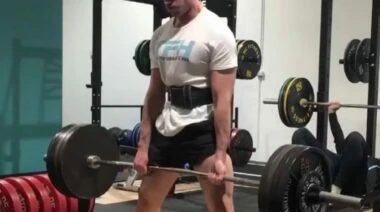
In essence, fitness is general, while conditioning is specific. Although there is an overlap between the two, they are not identical. For strength athletes, being conditioned involves exerting substantial force over relatively short durations while executing a particular skill.
Meeting the Conditioning Demands of Strength Sports
The solution is to train specifically for the sport. Exposure to high loads close to competition serves a crucial purpose, as it is indeed a skill and a form of conditioning for the upcoming competition environment.
In strongman competitions, this might involve practicing specific competition events during preparation.
In bodybuilding, the art of posing clearly falls within the realm of conditioning.
The Role of Cardiovascular Fitness
Impact on Training Ability
Cardiovascular fitness is not only vital for maintaining health. The evidence is irrefutable: regular aerobic exercise reduces resting blood pressure, resting heart rate, and mitigates the risk of various health conditions. Beyond health benefits, it significantly impacts an athlete's overall training capacity. It improves recovery between sets and workouts, enabling faster regeneration of ATP and blood supply to muscles. Although there may be a point of diminishing returns, I have yet to encounter a strength athlete who was "too strong" for their sport.
Cardio for Strength Athletes
Appropriate Cardio Type
Strength athletes should consistently engage in low - intensity aerobic work. High - Intensity Interval Training (HIIT) circuits are not superior. Given that high - intensity training occurs during every weightlifting session, there is no need to further develop anaerobic pathways. Authentic HIIT - style training, such as 15:60 intervals, offers no additional advantage. The optimal form of aerobic training for strength athletes is of moderate intensity, moderate duration, and low impact. Exercises like box jump and swing circuits, while visually appealing on Instagram, place greater strain on the body, and it is advisable to conserve recovery capabilities for specific training. I typically recommend off - legs cardio, such as using a spin bike, rower, or ski erg. As a general guideline, running is not advisable due to the often - unfavourable trade - off.
Training Protocols
Protocol 1: Engage in 30 minutes of continuous work, maintaining a heart rate between 130 - 150 beats per minute (bpm). In the absence of a heart rate monitor, this is the intensity at which a conversation can be sustained.
Protocol 2: Perform aerobic intervals. Work for 30 seconds and rest for 15 seconds. Select one or multiple exercises and rotate. Accumulate 30 minutes of work.
Protocol 3: Conduct tempo intervals. Work at a slightly higher intensity for 15 seconds and rest for 45 seconds. If running, this approach is recommended over long - distance running.
For strength athletes seeking to maintain health and a certain level of aerobic fitness, it is essential to diversify their routine. Avoid simply repeating existing activities and mislabelling them as cardio.
Conditioning for Strength Athletes
•
Author: Steve Keane
•
Fitness
Health
Share this article