
The Journey of a College Strength and Conditioning Coach: The Dumbbell Clean and Press
Introduction
Embarking on a career as a college strength and conditioning coach is no easy feat. For the young Jesse, it was a dream come true. However, there was no time for idle celebration. From the very first day, I was thrust into the heart of the action, assuming the role of head strength and conditioning coach for three teams. Simultaneously, I served as one of the primary strength and conditioning assistant coaches for the football team, a demanding commitment that consumed a significant portion of my time.
Initial Challenges and Responsibilities
It's not as though I lacked enthusiasm or experience. I had spent years interning and volunteering as a strength and conditioning coach. Nevertheless, the moment when the eyes of coaches and athletes fixate on you, holding you accountable, can be intimidating. I soon found myself facing more responsibilities than anticipated. One such duty was to work with injured football players during team weight room workouts.
Injured players, while undergoing rehabilitation with athletic trainers and physical therapists, were still required to participate in team workouts. This presented an opportunity to focus on movements and muscles unrelated to their injuries, addressing imbalances and weak points. Coaches emphasized the importance of maintaining upper - body explosiveness, especially for linemen, to preserve the strength and power they had already developed.
The Adapted Exercise: Seated Dumbbell Clean and Press
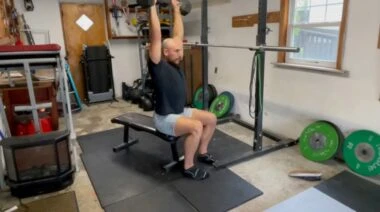
Typical pressing and pulling exercises could maintain general upper - body strength, but leg or foot injuries often led to a loss of movement coordination from the trunk to the limbs. To address this, I adapted an exercise my boss had healthy players perform in a circuit. The seated dumbbell clean and press was the solution.
Training Upper - Lower Body Coordination
Unlike traditional pressing exercises, the dumbbell clean and press trains the coordination between the upper and lower bodies. It involves a rapid hip hinge and extension, followed by immediate torso stabilization to halt the movement's momentum and press the weight overhead. Although power isn't generated through the legs in this exercise, the explosive hip hinge and extension challenge the torso in a unique way. The support required from the trunk is, in some respects, even more crucial than in a standing movement.
Since becoming a college coach, I've utilized the dumbbell clean and press with individuals from diverse backgrounds. It serves both as an injury - workaround and a calculated accessory exercise for upper - body circuits or conditioning sessions. This exercise enables you to lift heavier weights than you might think possible with strict pressing exercises, developing significant strength and stability in the trunk, shoulders, and upper - back musculature due to the momentum and timing involved. Additionally, it's an excellent choice for timed - set sequences where weight is reduced, and the goal is to achieve as many reps as possible within a given time limit.
Execution of the Dumbbell Clean and Press
Step - by - Step Guide
Positioning: Sit on the edge of a bench, ensuring sufficient space to touch the dumbbells to the floor in front of you. Start seated upright, holding one dumbbell in each hand with a neutral grip (thumbs facing up), while maintaining proper lower - back alignment to avoid excessive arching.
Hinge Movement: Keep your arms relatively straight and hinge forward from your hip crease with a flat back until the tops of the dumbbells touch the ground.
Explosive Extension: Brace your trunk and forcefully extend through your hips to sit up tall again. At the exact moment of extension, shrug your shoulders.
Cleaning the Dumbbells: Utilize this explosive movement to whip your arms, propelling the tops of the bells to your shoulders. Keep the dumbbells rotating close to your elbows, maintaining the same hand position.
Pressing Overhead: As soon as the dumbbells reach your shoulders, drive them overhead, aligning the bells with the sides of your ears. Be cautious not to lean too far back. Instead, firmly stop your momentum, keeping your torso rigid before pressing the weight overhead.
Returning the Dumbbells: Lower the bells back to your shoulders and then back to the floor in the same manner as the initial movement.
Focus on Control and Stability
The key to this exercise is to maintain fluidity while pausing briefly at the top of the press to enhance shoulder stability. Exercise control throughout the movement, moving aggressively without sacrificing posture as you clean the dumbbells from the floor to your shoulders. This exercise is ideal for building total upper - body strength or for targeting local muscular or total endurance. The most common error is attempting to increase weight or reps without maintaining control and stabilization. The effectiveness of this exercise lies in learning to generate force quickly over a short distance and then promptly halting the movement to redirect the force, all while preventing yourself from losing balance on the bench.
Variation: The Snatch
For those seeking variety while training the same abilities, converting the clean and press into a snatch can be an option.
Prerequisite: Ensure you can stabilize the clean before attempting this variation. Start with lighter dumbbells, turning them so your palms face the ground.
Hinge and Extension: Hinge forward in the same manner, but without necessarily touching the bells to the floor. Extend, shrug, and keep the bells close to your body. Visualize throwing them overhead and locking them in place with shrugged shoulders.
Cycling the Movement: Pause briefly overhead, lower the bells close to your shoulders, and continue cycling through the movement. Caution: Do not release the bells overhead, as I would be held accountable if they were to fall on your head, and I already have enough on my plate.
No Legs, No Worries- Keep Your Upper Body Strong and Quick
•
Author: Steve Keane
•
Fitness
Health
Share this article